

The World's Only Workplace Bereavement Programme That Builds Grief Champions From Within
Stop losing valuable employees. Start building a compassionate, resilient, and productive workforce. We provide globally recognised, evidence-based training and support to transform how your organisation manages grief.
Our Core Belief
Grief Is NOT A Mental Health Issue.
It's a normal, human response to loss. Yet, it is consistently misunderstood and mismanaged in the workplace, leading to disengaged employees, lost productivity, and a damaged culture. 85% of managers feel unprepared to support a grieving employee. We're here to change that — with practical, human-centric skills that empower your team from within.
The Unseen Cost of Grief
Right Now, Around the World
Counters update in real time from midnight today, based on WHO global mortality data and ONS UK mortality, workforce bereavement, and employment statistics.
Transparency
Data Sources & Methodology
Every counter is based on publicly available, peer-reviewed data. Click each source to see the full methodology.
| Annual figure | ~56,900,000 deaths per year globally |
|---|---|
| Daily figure | ~155,890 deaths per day |
| Per second | ~1.804 deaths per second |
| Primary source | WHO Global Health Estimates |
| Annual figure | ~607,000 deaths per year in the UK |
|---|---|
| Daily figure | ~1,663 deaths per day |
| Primary source | ONS Deaths Registered in England and Wales |
Note: Figures based on the most recently published ONS annual data.
| Annual figure | ~36,600,000 employees globally affected per year |
|---|---|
| Daily figure | ~100,274 employees per day |
| Methodology | ONS UK bereaved employees figure (3.8m/year) scaled proportionally to global workforce using ILO employment data |
Note: This is a modelled estimate. Actual figures will vary by country, sector, and employment rate.
| Annual figure | ~3,800,000 UK employees bereaved per year |
|---|---|
| Daily figure | ~10,411 employees per day |
| Primary source | ONS Labour Market Statistics |
Note: Based on ONS estimates of UK employees who experience the death of a close family member or colleague each year.
| £7bn+ | Annual cost of grief-related productivity loss to UK employers. Source: Grief in the Workplace report, Marie Curie / Centre for Mental Health, 2021. |
|---|---|
| 85% | Of managers feel unprepared to support a grieving employee. Source: Workplace Bereavement Survey, Sue Ryder, 2022. |
The Pathway
Three Steps to a Grief-Literate Organisation
Whether you're starting from scratch or building on existing support, our pathway is clear, structured, and built around your sector.
Take our free Workplace Readiness Assessment. In under 10 minutes, you'll receive your personalised score, tier eligibility, and a gap analysis showing exactly where your organisation stands.
Nominate your Bereavement Advocates, roll out e-learning for all staff, and access 3 years of wrap-around support — including your 24/7 helpline, CPD webinars, and peer network.
Earn the Bereavement Culture Mark. Join the public directory of accredited organisations and renew annually as your culture grows.
Accreditation
Proof, Not a Pledge.
Introducing the Bereavement Culture Mark — the UK's only tiered accreditation for workplace grief literacy.
Any organisation can say they support bereaved employees. The Bereavement Culture Mark proves it. Based on a 150-point sector-specific assessment, your organisation is independently evaluated and awarded one of three tiers.
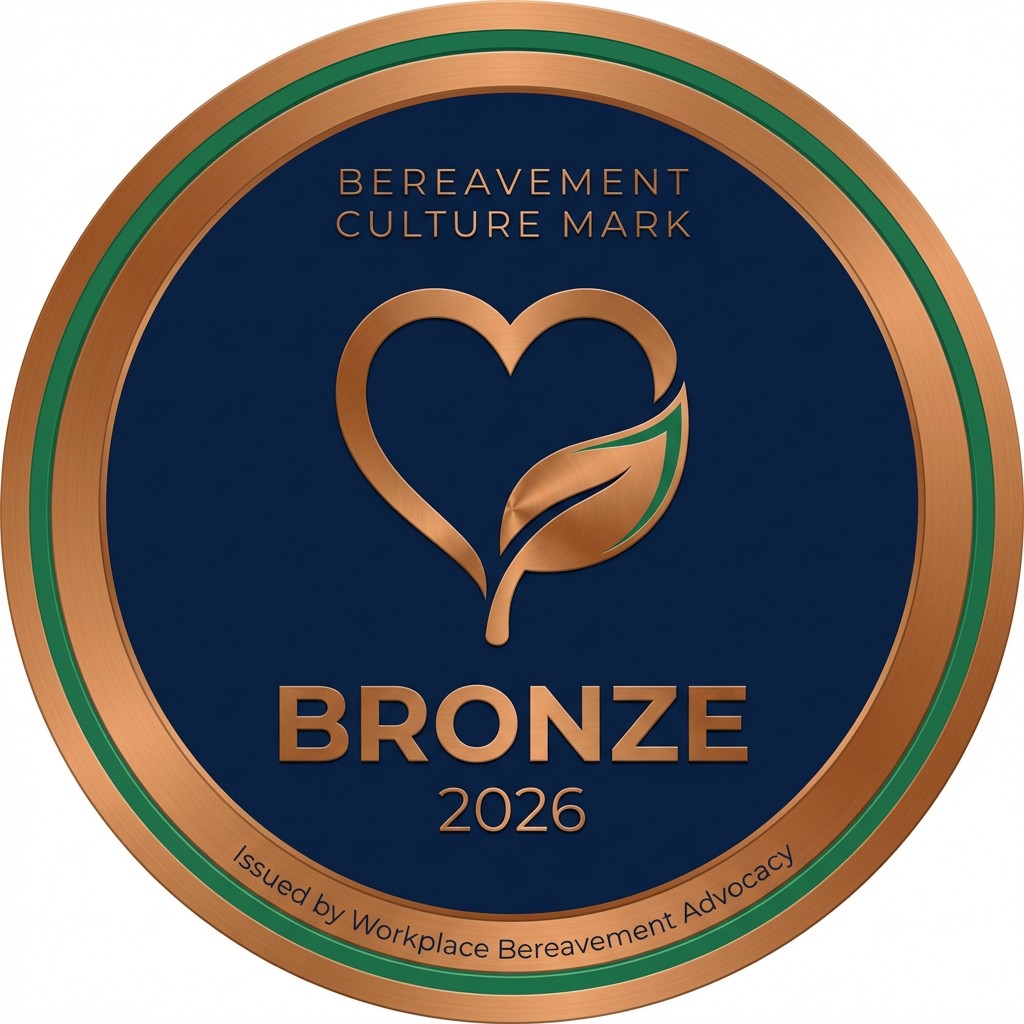
You've taken the first steps. Your organisation recognises grief as a workplace issue and has foundational support in place.

Your organisation has trained advocates, clear policies, and a structured approach to supporting bereaved employees.
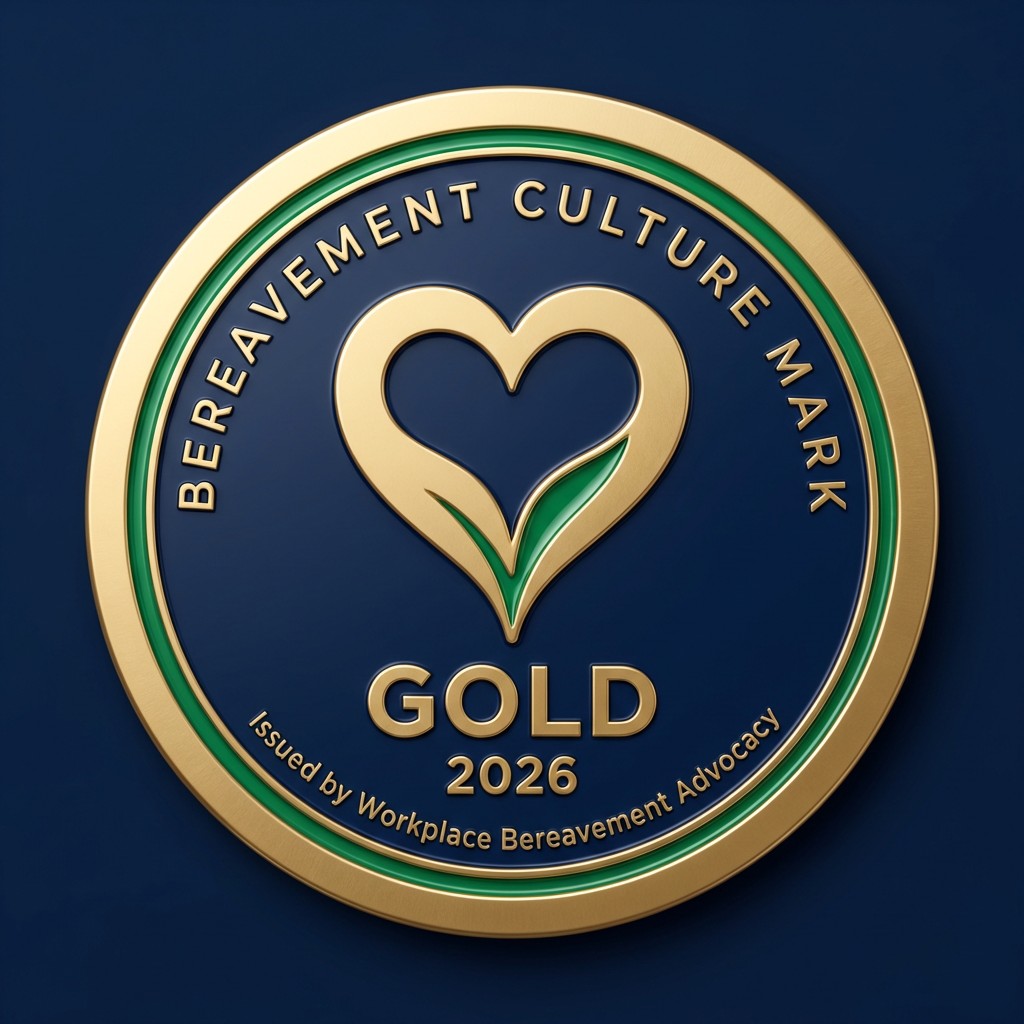
You are a sector leader. Your organisation embeds grief literacy at every level — from policy to culture to ongoing support.
Is Your Organisation Prepared for Bereavement?
Most aren't. Our free, confidential assessment identifies the gaps in your current approach in under 10 minutes — and gives you a personalised action plan.
Take the Free Workplace Readiness AssessmentCPD-Accredited Online Courses
Self-paced e-learning for individuals and teams. Grief awareness, conversation skills, and bereavement advocacy — all CPD certified with instant access.
Where We Work
Specialist Support Across Every Sector
From the complexities of a construction site to the sensitive environment of a school, we tailor our training to meet the unique challenges of your industry.
Construction
Suicide risk is 3.7x the national average. 51% of workers leave after a colleague's death.
Learn moreEducation
Teachers are 42% above average for suicide risk. Most schools have no grief plan.
Learn moreHealthcare
64% of frontline workers never receive a post-death debrief.
Learn moreSEND
Children with SEND process grief differently. Most staff have no specialist training.
Learn moreCorporate
Each workplace death affects up to 135 colleagues. Multi-site organisations face the highest coordination risk.
Learn moreUniformed Services
Suicide is the #1 cause of death in young veterans. 14,508 police officers signed off with poor mental health in 2024.
Learn moreClient Voices
Trusted by Organisations Across the UK
"The training was transformative. Our managers now feel confident and equipped to support grieving colleagues. The difference in our team culture has been remarkable."
"As a construction company, we knew grief was an issue but didn't know how to address it. Workplace Bereavement gave us the tools, the training, and the ongoing support to make real change."
"Many of our colleagues found the support from Workplace Bereavement to be compassionate and professional. Following the sudden loss of a colleague, they delivered sessions on Understanding Grief to over 80 team members. We would recommend them to any organisation."
For HR, L&D & Wellbeing Teams
Workplace Bereavement Advocacy
Equip your organisation with the tools, training, and ongoing support to manage bereavement with confidence, compassion, and consistency.
- ✓CPD & CITB Accredited Advocate Training
- ✓E-Learning for all staff levels
- ✓Strategic Consultancy & Policy Review
- ✓3-Year Membership Portal Access
- ✓Confidential Counselling Helpline

For Headteachers, SENCOs & DSLs
Young Hearts Education
Specialist, CPD-accredited training to equip schools and SEND settings with the unique skills needed to support grieving children and young people.
- ✓Whole-School Staff Training
- ✓SENCO & DSL Specialist Support
- ✓School Readiness Assessments
- ✓Age-Appropriate Resources & Lesson Plans
- ✓Expert Webinars & Ongoing CPD
Members Portal
Ongoing Support, Beyond the Training Day
Our commitment to you doesn't end after a workshop. Our exclusive membership portal provides your Grief Champions with 3 years of wrap-around support — the sustainable way to embed a culture of compassion.
Learn More About MembershipAre You a Grief Support Provider?
The WBA Global Grief Support Directory is the world's first dedicated platform connecting organisations, charities, counsellors, and practitioners who provide grief support — with the people and workplaces who need them.
Whether you're a bereavement charity, a counselling service, an EAP provider, or a workplace specialist — register your organisation and become part of a trusted global network.
Free for Charities
Charities and community groups list for free, forever
Searchable Worldwide
Filtered by country, specialism, delivery mode and audience
Verified Listings
All organisations reviewed against our Code of Conduct
Reach More People
Be found by HR teams, schools, and individuals seeking support
Ready to Build a Grief-Literate Culture?
Take the free assessment, or book a no-obligation consultation with our team. Let's discuss how we can transform the way your organisation supports people through loss.